

Most pages on this topic pair a sacred geometry figure with a chakra and move on. The flower of life for the heart, Metatron’s cube for the crown, and so on. Almost none of those pairings are traditional. They were invented in the last few decades and they vary wildly between sources.
What almost nobody mentions is that the chakras already have their own sacred geometry, and it is precise. Specific numbers of lotus petals, specific triangles, a square, a hexagram. That is the real answer to sacred geometry chakra symbols, and it is older and more interesting than the modern pairings.
So this guide does both. The traditional yantras first, then the sacred geometry symbols people usually mean, and I will tell you clearly which is which.
The traditional chakra symbols are sacred geometry
Chakra is a Sanskrit word meaning wheel, and the word chakra carries that sense of a turning disc rather than a static point. Each of the major chakras has a yantra, a geometric diagram used for meditation, and each yantra follows a fixed design. The petal counts are not decorative. They are part of the system.
Every one of the seven energy centers is drawn as a lotus flower with a set number of petals and a figure at its heart. That structure is consistent across the spiritual traditions that use it, which is exactly what you would expect from something genuinely old.
Root chakra symbol
Muladhara, at the base of the spine, is a four-petaled lotus with a yellow square at its center. The element of earth is the square, and the earth element is why this geometric shape is the only one in the set with four straight equal sides. Nothing else in the body is drawn that way.
Sacral chakra
Svadhisthana is a six-petaled lotus containing a crescent moon, which carries the element of water. The curve is doing the opposite work to the square below it.
Solar plexus chakra
Manipura is a ten-petaled lotus with a downward pointing triangle at its center representing fire. That inverted triangle is one of the most recognisable geometric patterns in the whole system, and people often mistake it for a modern addition. It is not.
Heart chakra
Anahata is a twelve-petaled lotus containing two intersecting triangles that form a hexagram, a six-pointed star. Upward and downward triangles locked together, matter and spirit meeting at the heart. Its element is the element of air, and the whole figure is about emotional balance held between two opposing forces rather than achieved by removing one of them. If you only learn one traditional chakra figure, learn this one.
Throat chakra
Vishuddha is a sixteen-petaled lotus, and its element is space rather than any of the four physical elements below it. The system changes character here, which is the point.
Third eye chakra
Ajna is usually drawn with two large petals, though the traditional description gives ninety-six petals arranged as two groups of forty-eight. Its element is given as light, or in some sources darkness. The popular two-petal drawing is a simplification rather than an error.
Crown chakra symbol
Sahasrara is the thousand-petaled lotus, and its element is consciousness itself rather than anything in the physical realm.
Four, six, ten, twelve, sixteen. Those are not random. Read in order they are a design system that gets more complex as it rises, which is a far more elegant idea than any of the modern pairings, and it comes out of Hindu tradition rather than from a workshop in the 1980s.
The sacred geometry symbols people usually mean
These are the figures that come up when most people search for sacred geometry patterns. They are genuinely old, genuinely beautiful, and their links to specific chakras are mostly modern. Both things are true at once.
What makes these sacred symbols rather than ordinary geometrical patterns is that people across unconnected cultures kept arriving at the same shapes. An ancient symbol that shows up carved on three continents was not copied. It was rediscovered, because the construction is simple enough that anyone with a compass finds it eventually. Some traditions read that as mother earth writing in a language we can follow. You do not have to go that far to find it striking.
Vesica piscis
The simplest figure and the parent of almost everything below. Draw two circles of the same size so that each passes through the center of each circle opposite. The lens where they overlap is the vesica piscis, a Latin word meaning fish bladder.
Every figure that follows is built by repeating this one move. If you understand the vesica piscis you understand the lot.
Seed of life

Seven circles, one in the middle and six around it, each passing through the others’ centers. This is the pattern with the deepest history of the group and it appears in different cultures across a very long stretch of time.
Seven circles, seven main chakras. That correspondence is why the seed of life gets used in chakra work at all, and it is a modern observation rather than an ancient teaching.
Egg of life and fruit of life
The egg of life and the fruit of life are the next stages of the same construction, built by continuing to add circles on the same grid. The fruit of life is thirteen circles, and it matters because of what comes out of it next.
Flower of life symbol

Keep expanding and the circle counts run 1, 7, 19, 37, 61, 91, 127. The nineteen circle version is what most people picture when they say flower of life.
Worth knowing: the name flower of life is modern and came in with the New Age movement. The pattern itself is ancient and turns up carved in ancient cultures across several continents. The pattern is old, the label is new, and people conflate the two constantly.
Metatron’s cube symbol
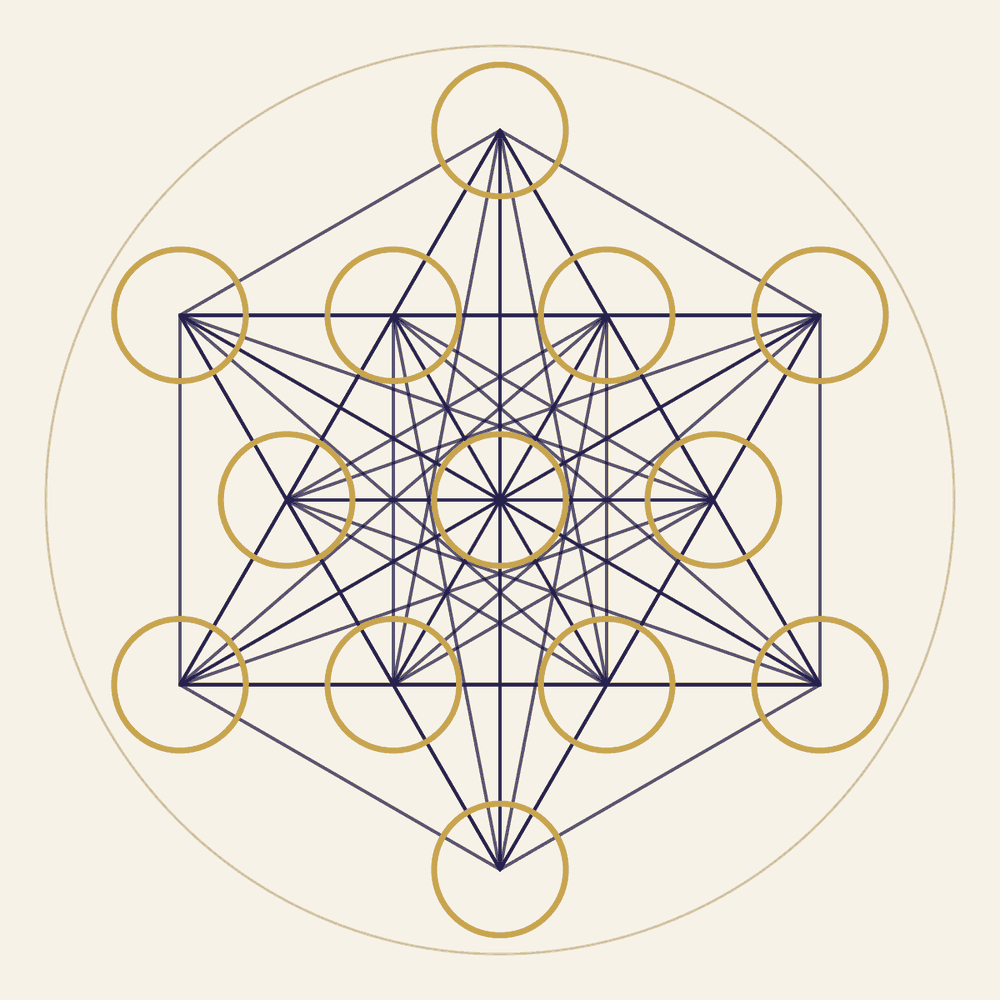
Take the thirteen circles of the fruit of life and draw a line from the center of each circle to the centers of the other twelve. The interconnected lines that result are Metatron’s cube.
It is named for Archangel Metatron, an angel from apocryphal texts including the Second Book of Enoch and the Book of the Palaces, where he stands second only to God.
The reason it matters geometrically is that the figure contains all five platonic solids. Replace the circles with spheres and the dodecahedron and icosahedron appear alongside the other three, as does the star tetrahedron.
Platonic solids
There are exactly five, and there can only be five. The tetrahedron, cube, octahedron, dodecahedron and icosahedron are the only solids whose faces are all identical regular polygons. Classical tradition assigned four of them to the elements, fire, earth, air and water, and the fifth to the heavens.
That is the closest sacred geometry gets to a proof. The limit of five is a fact about space, not a belief.
Merkaba, the star tetrahedron

Two tetrahedra interlocked, one pointing up and one down. It is the hexagram of the heart chakra rendered as a 3D model rather than flat, which is the neatest genuine link between the two systems in this whole article.
The related vector equilibrium, the cuboctahedron, is sometimes grouped with it, though that is a twentieth century addition to the family.
Sri yantra
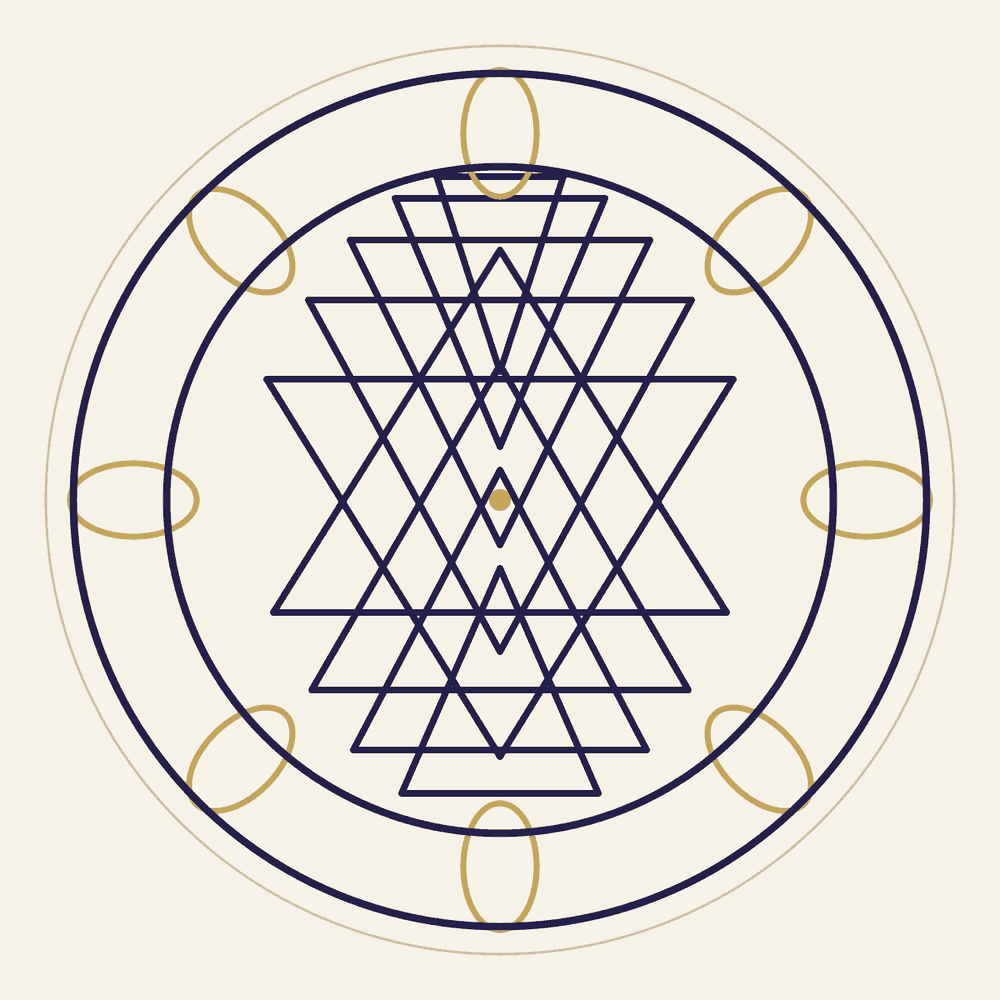
Nine interlocking triangles, four pointing up and five pointing down. The upward triangles represent Shiva and the downward ones Shakti, so the female energies of the figure are the majority, which surprises people.
At the middle is the bindu, the central point from which the whole figure and the cosmos are said to expand. This is the one figure in this section that is genuinely part of the same tradition as the chakras rather than borrowed into it.
Golden ratio and the fibonacci sequence

The golden ratio is roughly 1.618, and the fibonacci sequence approaches it as it runs. The spiral built from it appears in shells, seed heads and the arms of galaxies, which is why sacred geometry writing reaches for it constantly.
Be careful here. The proportion genuinely appears in many life forms. It does not appear in everything, and claims about solar systems and the human body are usually stretched to fit. The real examples are impressive enough.
Tree of life

Ten spheres joined by paths, from the Kabbalistic tradition rather than the Indian one. It is often laid alongside the chakra system because both map a route from the material world to the divine, but they are separate systems with separate logic and the overlay is approximate at best.
Endless knot, triquetra and mandala
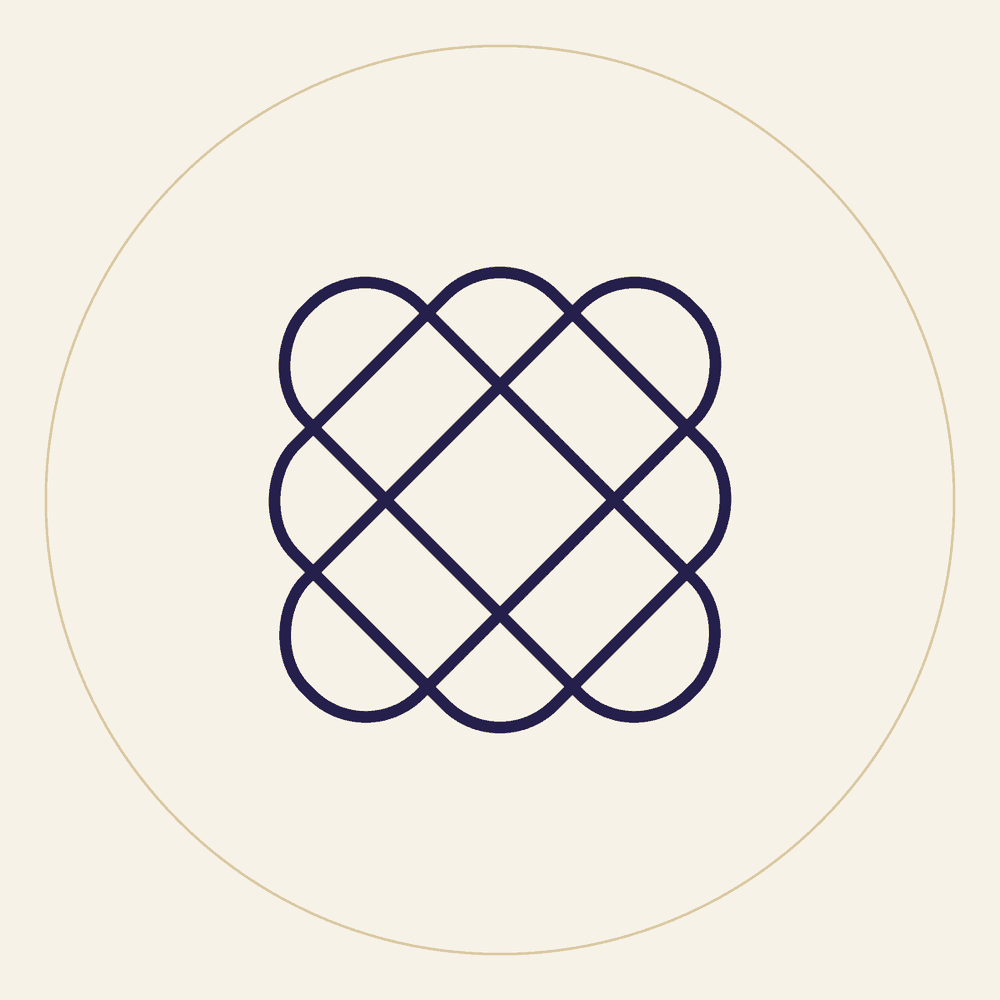
The endless knot from Buddhist tradition has no beginning and no end, standing for the way everything depends on everything else.

The triquetra is three vesica piscis lenses arranged around a center, which makes it a closer relative of the flower of life than it looks.
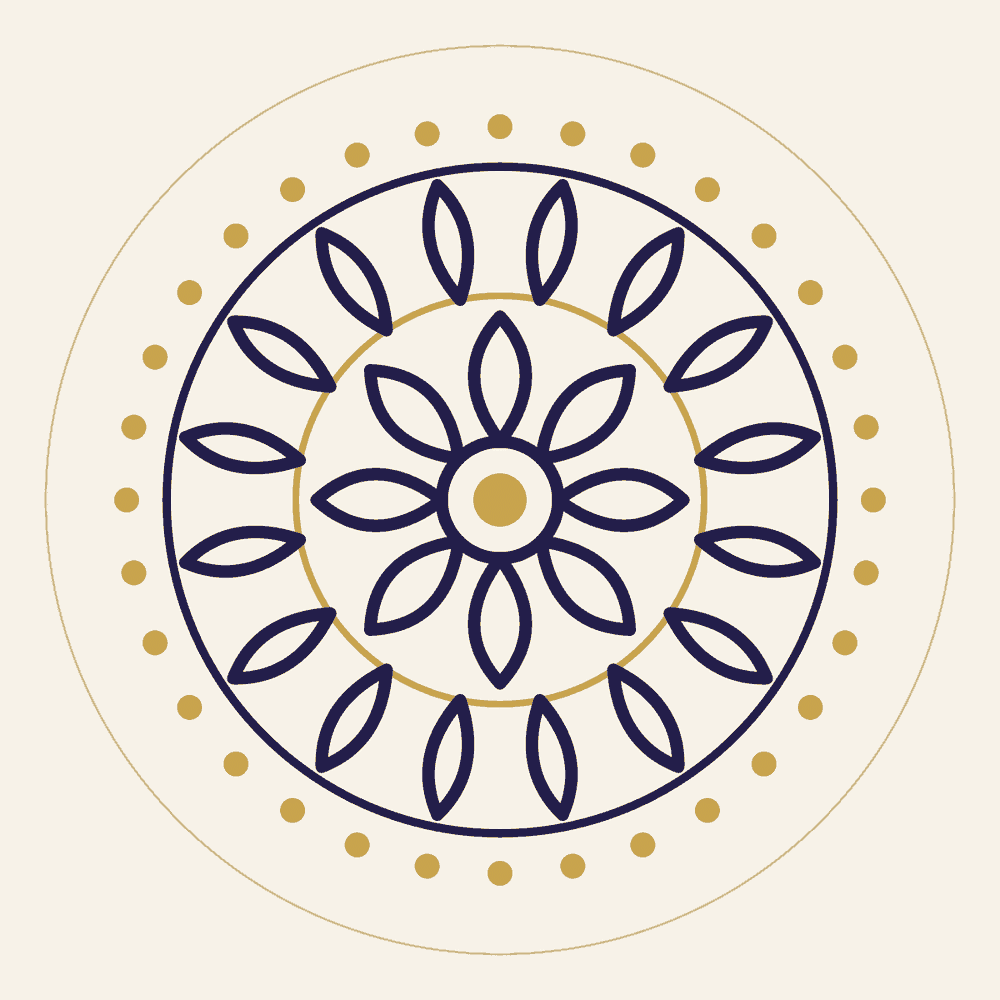
A mandala is any geometric figure built outward from a center, and the chakra yantras are mandalas. This is the category that contains most of the others.
Which pairings are traditional and which are invented
This is the part other pages skip, and it is the only part that changes how you practise.
Traditional, from the same tradition as the chakras: the lotus petal counts, the square at the root, the crescent at the sacral, the downward triangle at the solar plexus, the hexagram at the heart, and the Sri Yantra as a related meditation figure. These come with ancient wisdom attached because they are genuinely ancient.
Modern: flower of life for the heart, Metatron’s cube for the crown, seed of life for the seven centers, the merkaba for any particular chakra at all. Different sources assign these differently, which is the tell. When a correspondence is traditional, the sources agree.
None of that makes the modern pairings useless. A unique symbol you have chosen deliberately can hold attention better than one handed to you, and attention is most of what these figures do. It just means you should not be told they are ancient when they are not.
How to use them
The simplest ways are the best ones here, and none of this needs equipment.
Pick one figure. Place it where you will see it, or hold the image, and look at it for two or three minutes without trying to achieve anything. Sacred geometry works as a focus object, and the complexity of the pattern is what keeps the eye from wandering.
If you are working with a specific chakra, use its traditional yantra rather than a modern pairing. Trace the shape with your eyes, from the outer lotus petals inward to the central point. For the root, find the square. For the heart, follow the six-pointed star around.
Adding this to a daily routine matters more than the length of any single sitting. Three minutes most days beats an hour once a month, in this as in everything else. Worked into daily life rather than reserved for special occasions, a single figure becomes a powerful tool for settling attention, which is one of the specific aspects of practice most people find hardest.
People often report that this kind of sustained looking supports spiritual growth in a way that reading does not, and some describe periods of genuine spiritual awakening around it. Take that as a description of what attention does rather than as a property of the shape.
Drawing the figures by hand is the underrated version. Constructing a seed of life with a compass takes about ten minutes and teaches you more about the pattern than reading about it ever will.
What this is and is not
These are contemplative tools. They give the mind somewhere to rest, they carry deep meanings that different cultures have layered onto them over centuries, and working with them supports spiritual awareness and personal growth in the ordinary sense of paying closer attention to yourself.
They do not affect your physical health. No geometric element has been shown to alter the human body, and the energy points and life force energy described in these traditions have not been detected by any instrument. Sacred geometry is not a blueprint of creation in any literal sense, whatever you read elsewhere.
What is genuinely remarkable does not need the exaggeration. There really are only five platonic solids. The vesica piscis really does generate the whole family. The fibonacci sequence really does show up in the way plants grow. That is enough.
Held that way, these figures are a useful tool for inner peace and for spiritual practices of any kind, and they sit comfortably alongside whatever you already do. Held as physics, they are not, and spiritual evolution has never required anyone to overstate the evidence.
Where they do reliably help is in moving attention from the physical world to the inner world for a few minutes at a time. Whether you name what you find there pure consciousness, a higher power, divine energy or simply quiet is your business rather than mine. The practice works the same either way, and the positive energy people describe afterwards is mostly the ordinary effect of having stopped.
Spiritual enlightenment is not on offer from a diagram. A steadier ten minutes is, and that compounds.
Questions about sacred geometry and chakras
What are the sacred geometry symbols for the chakras?
Traditionally each chakra has a yantra with a set number of lotus petals: four at the root, six at the sacral, ten at the solar plexus, twelve at the heart, sixteen at the throat, two at the third eye and a thousand at the crown. Inside them sit a square at the root, a crescent at the sacral, a downward triangle at the solar plexus and a hexagram at the heart.
Is the flower of life a chakra symbol?
Not traditionally. The pairing of the flower of life with a specific chakra is modern and varies between sources. The pattern itself is ancient, though the name flower of life came in with the New Age movement.
What is the vesica piscis?
The lens formed where two equal circles overlap, each passing through the other’s center. The Latin name means fish bladder. It is the basic move from which the seed of life, flower of life and Metatron’s cube are all built.
How is Metatron’s cube made?
By drawing lines from the center of each of the thirteen circles of the fruit of life to the centers of the other twelve. It is named for Metatron, an angel from apocryphal texts, and it contains all five platonic solids.
How many platonic solids are there?
Exactly five. The tetrahedron, cube, octahedron, dodecahedron and icosahedron. It is mathematically impossible for there to be a sixth.
How many triangles are in the Sri Yantra?
Nine interlocking triangles, four pointing upward for Shiva and five pointing downward for Shakti, around a central point called the bindu.
Which chakra is the merkaba?
There is no traditional answer. The merkaba, or star tetrahedron, is two interlocked tetrahedra, and it is the three dimensional version of the hexagram found at the heart chakra, which is the closest genuine connection.
What element goes with each chakra?
Earth at the root, water at the sacral, fire at the solar plexus, air at the heart, space at the throat, light at the third eye and consciousness at the crown.
Do I need the traditional symbols or can I use any?
Either works as a focus object. Use the traditional yantra if you want the figure that belongs to the system, and any pattern you find compelling if you simply want somewhere to rest your attention.
The short version
The chakras already have sacred geometry built into them, and it is specific. Petal counts, a square, a crescent, a triangle, a hexagram. Most of what gets sold as sacred geometry chakra symbols is a modern pairing of older figures with centers they were never attached to.
Use either. Just know which one you are using.
Want the whole chakra system in one place?
My free Chakra Guide and Workbook walks you through all seven centers, what each one governs, how to tell when one is out of balance, and what to do about it. Written for beginners, with space to work rather than only to read.
For a fuller comprehensive guide to the symbols themselves, including the ones outside this family, see 21 symbols of enlightenment. For the chakra correspondences in one table, see my chakra meaning chart, and for chakra color specifically, white and gold both sit outside the standard seven and are worth understanding.
love, light and blessings, Sunny